



Annals of the Empire

The Annals of the Empire preserve the official succession of those who have held the highest executive office of the Galactic State. The register begins with the reigning Galactic Emperor and proceeds backward through the final Supreme Chancellors of the Galactic Republic.

Each entry records the known particulars of the officeholder and summarizes the character, achievements, crises, and lasting consequences of the administration. The Chancellorship and the Imperial Throne are presented as parts of one continuous constitutional succession, the latter having inherited the authority and responsibilities of the former upon the Imperial Ascension.

Galactic Emperors

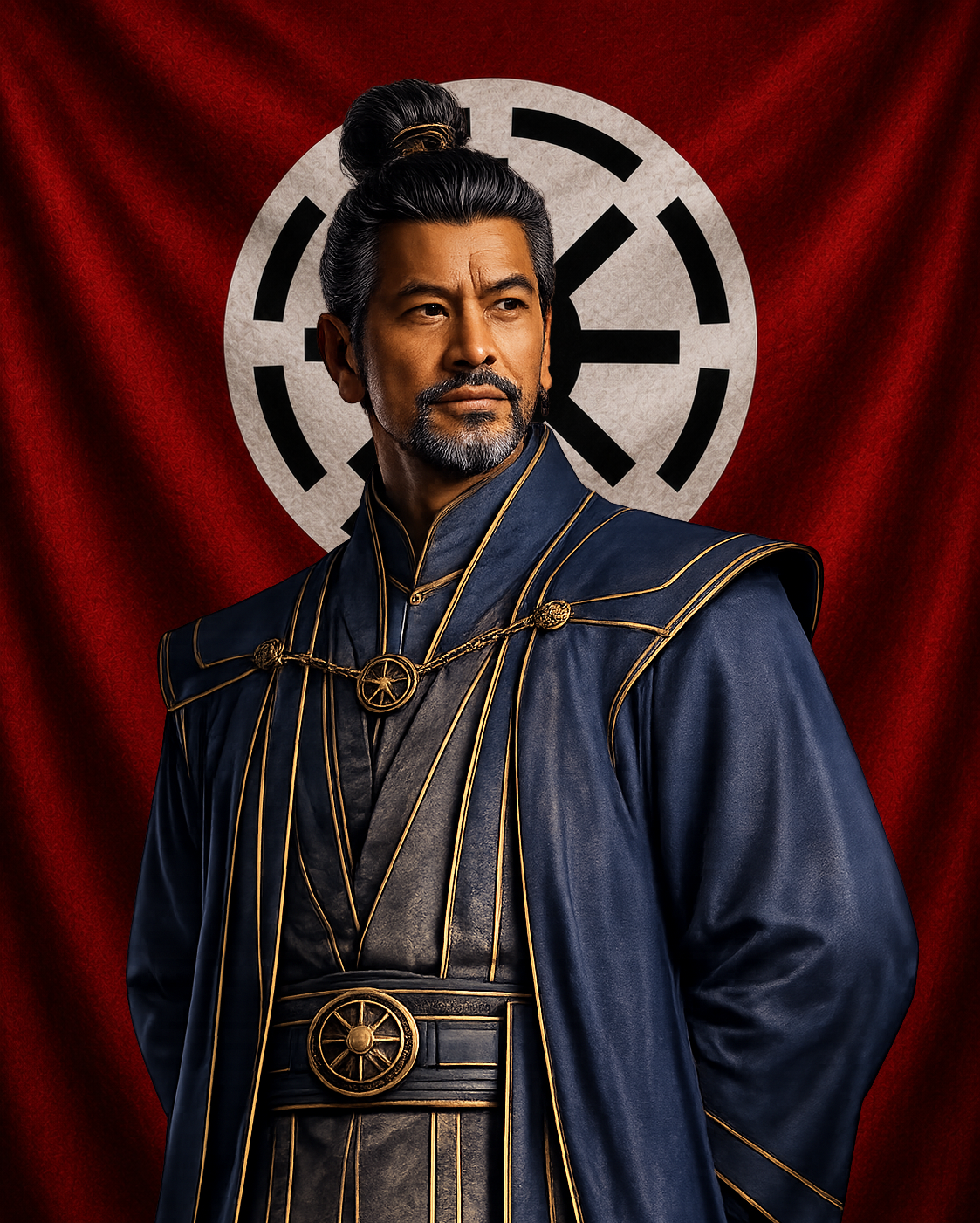
Galactic Emperor Draco Tanos
Galactic Emperor

Draco Tanos

1 AIA – Present
Species
Human
Homeworld
Jaminere
Political Affiliation
New Order
Tenure
1 AIA to Present
Accession
Acclaimed by the Galactic Senate
Departure
Incumbent

Draco Tanos is the first and reigning Galactic Emperor, acclaimed by the Galactic Senate following the ratification of the Imperial Charter and the constitutional reorganization of the Galactic Republic.

A veteran of the Republic Judiciary Forces, the Stark Hyperspace War, and the Clone Wars, Tanos entered the Imperial Throne with an established reputation as a naval commander, administrator, and defender of the Galactic State. His acclamation followed seven months of service as Interim Supreme Chancellor, during which he restored civil order, remobilized loyal military forces, suppressed Separatist holdouts, and directed reconstruction across devastated Republic worlds.

The opening of his reign was defined by the formal establishment of the New Order and the conversion of wartime and transitional institutions into permanent organs of the Empire. The Commission for the Protection of the Republic was reorganized as the Commission to Preserve the New Order, the Republic's intelligence services were consolidated, and the executive ministries were placed within a more coherent central administration. The Senate continued as the representative body of the Galactic State under the authority established by the Imperial Charter.

Tanos also oversaw the transformation of the surviving Jedi Order into the Imperial Order. Jedi willing to pledge fealty to the new constitutional order entered Imperial service as Knights of the Empire, while those who declined were permitted to retire under the security provisions imposed during the transition. This settlement prevented a second internal war at a time when the galaxy remained exhausted by the Clone Wars.

His reign has been characterized by the restoration of central authority, expansion of the Imperial civil service, reconstruction of war-damaged systems, and the effort to replace the corruption and institutional paralysis of the late Republic with a permanent constitutional executive. Supporters regard him as the founder of the modern Galactic State and the architect of a durable peace. Critics of the New Order have objected to the concentration of authority in the Imperial Throne and the broad security powers granted to the institutions created during his reign.


Official assessment: Emperor Draco Tanos is remembered as the statesman who preserved the continuity of the Galactic State while replacing the exhausted constitutional machinery of the late Republic with the institutions of the Galactic Empire.

Supreme Chancellors of the Galactic Republic

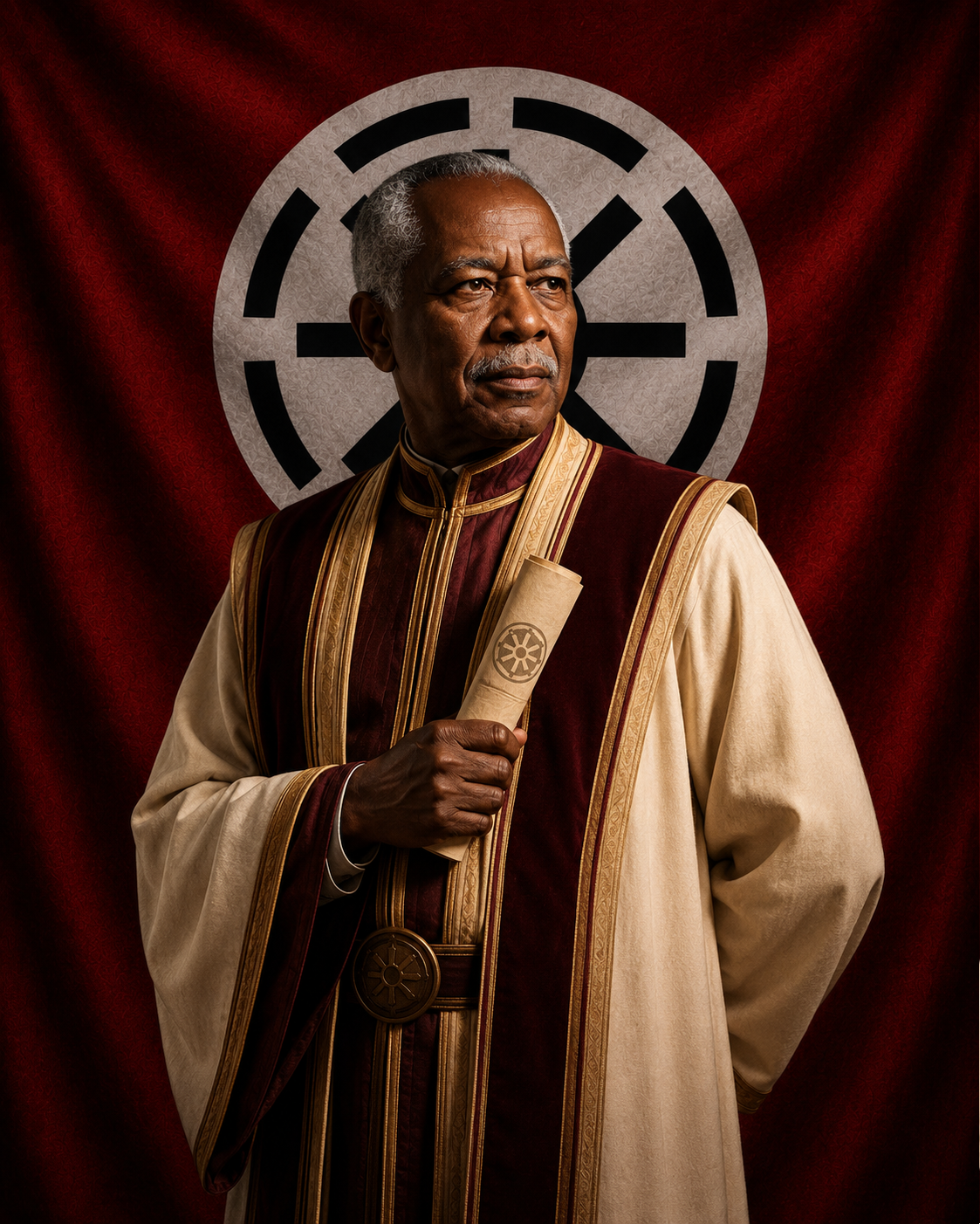
Interim Supreme Chancellor Draco Tanos
Interim Supreme Chancellor

Draco Tanos

1 BIA – 1 AIA
Species
Human
Homeworld
Jaminere
Political Affiliation
Loyalist (Militarist)
Tenure
Seven months
Accession
Emergency constitutional succession
Departure
Acclaimed Galactic Emperor

Draco Tanos served as the final chief executive of the Galactic Republic, assuming the Interim Chancellorship after Kor'vas Or'kee was declared unfit to exercise the powers of office.

Tanos entered the Chancellorship under the Republic's emergency provisions after Orders 5 and 65 transferred command authority to the Chief of the Defense Staff. His immediate task was not to create a new regime, but to prevent civil war, restore lawful administration, and secure the capital while the Senate determined the future of the Chancery.

During his seven-month administration, the Interim Chancellor restored the armed forces to operational strength, freed officers and resistance leaders detained by the Chancellor's Tribunal, and brought the Tribunal's secret judges into custody. He also authorized renewed campaigns against remaining Separatist forces and directed reconstruction funding toward both loyalist and reconciled former Separatist worlds.

Tanos's government tasked the Republic Security Bureau to investigate corruption throughout the civil service and strengthened cooperation between the military, the Security Council, and the Galactic Senate. His popularity, coupled with public exhaustion after a decade of war, contributed to the rapid growth of the New Order faction and the transformation of COMPOR into a state-supported reconstruction and civic organization.

The Senate spent much of his tenure debating whether the old Chancellorship could still provide a stable executive. Following Tanos's address on the historic role of monarchies and imperial systems in galactic civilization, the New Order majority advanced the constitutional settlement that became the Imperial Charter. Upon its adoption, the Chancellorship was retired and Tanos was acclaimed Galactic Emperor.

Official assessment: The Interim Chancellorship is regarded as the lawful bridge between the Republic and Empire, preserving governmental continuity during the Chancery Crisis and preparing the constitutional foundation of the New Order.
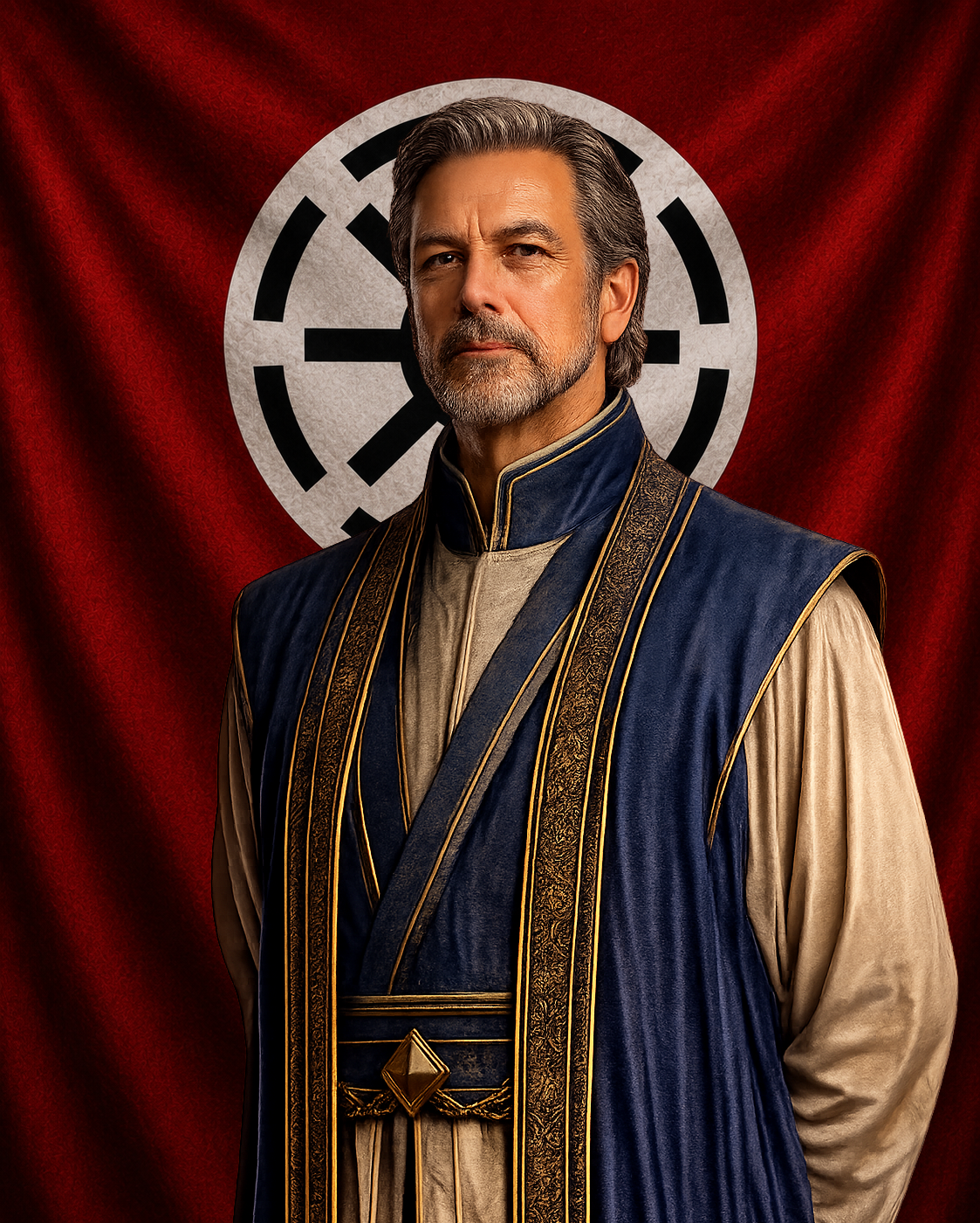
Supreme Chancellor Kor'vas Or'kee
Supreme Chancellor

Kor'vas Or'kee

7 BIA – 1 BIA
Species
Bothan
Homeworld
Bothawui
Political Affiliation
Loyalist (Rim)
Tenure
7 BIA to 1 BIA
Accession
Elected following Palpatine's death
Departure
Removed under Orders 5 and 65

Kor'vas Or'kee was the last elected Supreme Chancellor of the Galactic Republic, presiding over the final years of the Clone Wars and the constitutional crisis that ended the old Chancellorship.

Elected after the death of Sheev Palpatine during the Battle of Coruscant, Or'kee inherited a government at war, a devastated galactic economy, and an executive office already strengthened by emergency legislation. He continued the Republic's military mobilization and remained in office beyond the ordinary constitutional limit with the support of senior military leaders who feared that a change of government could destabilize the war effort.

As the war drew toward its conclusion, Or'kee became increasingly protective of the extraordinary powers accumulated by the Chancellorship. He established the Chancellor's Tribunal for Crimes Against the Republic as a secretive court independent of both the Supreme Court and Senatorial oversight. Although presented as an instrument for prosecuting Separatist atrocities, its first defendants were celebrated members of the Republic military and Loyalist resistance movements.

The Tribunal, political arrests, and Or'kee's effort to demobilize forces loyal to the High Command brought the Republic to the edge of renewed civil war. After General Nottap of Corellia was convicted following a three-hour proceeding, Chief of the Defense Staff Draco Tanos ordered the liberation of the detainees, the arrest of the Tribunal's judges, and the activation of the Republic's emergency succession orders.

Or'kee and senior members of his cabinet were arrested, and the Senate recognized Tanos as Interim Supreme Chancellor. Or'kee's administration consequently became the central example cited by supporters of the Imperial Charter when arguing that temporary emergency powers and a weakly supervised Chancellorship had become a danger to the state.

Official assessment: Or'kee is remembered as an able wartime administrator whose attachment to emergency authority, abandonment of judicial restraint, and political misuse of the Chancellorship precipitated the final crisis of the Old Republic.
Supreme Chancellor Sheev Palpatine
Supreme Chancellor

Sheev Palpatine

20 BIA – 7 BIA
Species
Human
Homeworld
Naboo
Political Affiliation
Loyalist (Independent)
Tenure
20 BIA to 7 BIA
Accession
Elected after the Vote of No Confidence in Finis Valorum
Departure
Killed during the Battle of Coruscant

Sheev Palpatine led the Galactic Republic from the resolution of the Naboo Crisis through the opening years of the Clone Wars, becoming the longest-serving Chancellor of the late Republic before his death at Coruscant.

Palpatine rose from the Naboo delegation during the Trade Federation blockade of his homeworld. Following Queen Amidala's successful motion of no confidence against Finis Valorum, Palpatine secured election as Supreme Chancellor on a platform of reform, administrative competence, and renewed confidence in the central government. The liberation of Naboo early in his tenure strengthened his public standing and gave his administration an initial reputation for restored decisiveness.

His first two terms were marked by efforts to navigate the entrenched interests of the Senate, the expanding influence of major commercial organizations, and the growing separatist movement. As entire sectors rejected Coruscant's authority, Palpatine's government relied increasingly upon emergency legislation and the support of Loyalist delegations seeking stronger central coordination.

The Separatist Crisis transformed Palpatine’s Chancellorship. As thousands of systems threatened secession and the Senate remained divided over the Military Creation Act, Representative Jar Jar Binks introduced the motion granting Palpatine emergency powers. Acting under that authority, the Chancellor authorized the creation of the Grand Army of the Republic after the clone army on Kamino was revealed, and the Battle of Geonosis marked the beginning of the Clone Wars.

Palpatine served as commander-in-chief throughout the conflict and remained in office beyond the ordinary two-term limit under wartime emergency authority. As the war continued, the Senate granted the Chancellery broader control over military policy and other instruments of the Republic government, while Loyalist senators supported the war effort and a growing peace movement pressed for negotiation. To the public, Palpatine remained the central civilian leader of the Republic until his death during the Battle of Coruscant.

Palpatine was killed during the Battle of Coruscant in 7 BIA. His death removed the only Chancellor who had governed throughout both the separatist crisis and the first years of open war, leaving his successor to inherit the emergency powers, military burdens, and unresolved political divisions of his administration.

Official assessment: Palpatine is publicly remembered as a determined wartime Chancellor who preserved the Republic during the Naboo Crisis and the dangerous opening years of the Clone Wars. Allegations concerning hidden loyalties or manipulation of the conflict do not form part of the accepted public record.
Supreme Chancellor Finis Valorum
Supreme Chancellor

Finis Valorum

28 BIA – 20 BIA
Species
Human
Homeworld
Coruscant
Political Affiliation
Core
Tenure
28 BIA to 20 BIA
Accession
Elected; reelected after four years
Departure
Removed by Vote of No Confidence

Finis Valorum was a reform-minded Chancellor of House Valorum whose administration became trapped between entrenched Senate interests, corporate influence, and the growing inability of the Republic to enforce its own decisions.

Valorum entered office with the prestige of one of the Republic's oldest political houses and won reelection after his first four-year term. He was widely regarded as an experienced civil servant and capable diplomat, but his administration inherited a Senate already constrained by procedural delay, factional rivalry, and the influence of powerful commercial combines.

His government attempted to answer regional disputes through negotiation and limited intervention, yet the Republic's weak central institutions repeatedly frustrated decisive action. These difficulties culminated in the Trade Federation's blockade of Naboo. Valorum dispatched Jedi negotiators in an effort to secure a peaceful settlement, but the mission failed to prevent the Federation's occupation of the planet.

When Queen Amidala appealed directly to the Senate, the Chancellor was unable to overcome demands for commissions, investigations, and procedural delay. Amidala's motion of no confidence ended Valorum's administration before the completion of the Naboo Crisis and opened the way for the election of Naboo's Senator Sheev Palpatine.

Later Imperial historians have generally treated Valorum as a well-intentioned Chancellor constrained by a failing constitutional system rather than as the sole author of his administration's failures. His removal demonstrated how rapidly Senatorial confidence could collapse during a crisis and how little independent authority the Chancellorship possessed before the wartime reforms of his successor.

Official assessment: Valorum's administration is remembered as the last full expression of the prewar Republic, dignified in intention but unable to master the corruption and institutional paralysis that had taken root within the Senate.
Supreme Chancellor Kirames Kaj
Supreme Chancellor

Kirames Kaj

30 BIA – 28 BIA
Species
Togruta
Homeworld
Shili
Political Affiliation
Pacifist
Tenure
Approximately two years
Accession
Elected following Kalpana's resignation
Departure
Declined to seek a full term

Selected after Skor Kalpana's resignation, Kirames Kaj became the Republic's first Togruta Supreme Chancellor and completed the remainder of his unfinished term.

Kaj entered office as a respected member of the Pacifist Faction at a moment of public exhaustion and political anger. The Stark Hyperspace War had cost the Republic heavily, and the subsequent disappearance of the Katana fleet had taken thousands of lives while consuming an immense investment of public credits. Her election represented a deliberate Senatorial turn away from the military expansion associated with Kalpana's administration.

Her brief Chancellorship emphasized diplomacy, fiscal restraint, civilian oversight, and the restoration of confidence in the Republic's institutions. Kaj slowed further naval expansion while allowing investigations into the loss of the Katana fleet to proceed, seeking to steady the government rather than reverse every policy of her predecessor.

Kaj did not seek a full term when the regular election arrived in 28 BIA. Finis Valorum won the Chancellorship later that year, ending her caretaker administration after roughly two years in office.

Official assessment: Kaj is remembered as a disciplined caretaker whose Pacifist administration calmed the Republic after military disaster and restored sufficient confidence for an orderly election.
Supreme Chancellor Skor Kalpana
Supreme Chancellor

Skor Kalpana

36 BIA – 30 BIA
Species
Human
Homeworld
Atrisia
Political Affiliation
Militarist
Tenure
One full term and part of a second
Accession
Elected; reelected after four years
Departure
Resigned following the loss of the Katana fleet

Born on Atrisia into the influential Kalpana family, Skor Kalpana entered office promising to restore the Republic's ability to defend its citizens and its trade routes.

Kalpana was not regarded as corrupt or reckless. He was a serious security reformer who believed the Republic's overstretched Judicial Forces and dependence upon local defense fleets had left the state vulnerable to piracy, slavery, and regional conflict. His administration strengthened central coordination and advocated a measured expansion of Republic naval power.

The Stark Hyperspace War in 32 BIA appeared to vindicate his warnings. Although the Republic prevailed, the conflict exposed severe weaknesses in mobilization, logistics, and fleet readiness. In its aftermath Kalpana championed construction of the Katana fleet, two hundred Dreadnaught-class heavy cruisers intended to provide the Republic with a modern strategic reserve.

Within roughly two years the completed fleet vanished during its maiden deployment after a hive virus spread among its crews. The enormous loss of life, ships, and public credits destroyed confidence in the program. Though no evidence implicated Kalpana in wrongdoing, he accepted political responsibility and resigned during his second term.

Official assessment: Kalpana is remembered as an honorable and capable reformer whose effort to strengthen the Republic ended in catastrophe beyond his control, and whose resignation reflected a belief that public office required accountability.
Supreme Chancellor Frix
Supreme Chancellor

Frix

40 BIA – 36 BIA
Species
Human
Homeworld
Taris
Political Affiliation
Rim
Tenure
One four-year term
Accession
Elected by the Galactic Senate
Departure
Defeated at the conclusion of his term

Frix inherited a Republic whose institutions remained formidable on paper but increasingly struggled under the weight of bureaucracy, patronage, and political corruption.

A Human politician of the Rim Faction, Frix had long been regarded within elite political circles as the likely successor to Thoris Darus. His election fulfilled those expectations, but his administration proved unable to arrest the Republic's continuing institutional decline.

Frix was not remembered chiefly for personal scandal. Rather, his Chancellorship became associated with passivity while corruption and administrative stagnation continued largely unchecked. Senate procedure grew slower, corporate and factional interests became harder to restrain, and confidence in the Republic's ability to protect distant member worlds declined.

By the end of his term, demands for firmer leadership and security reform had gathered enough support to carry Skor Kalpana into office. Frix consequently became the clearest symbol of the complacent government Kalpana promised to replace.

Official assessment: Frix is remembered as a conventional but ineffective Chancellor whose failure to confront the Republic's deterioration helped make a major change in policy inevitable.
Supreme Chancellor Thoris Darus
Supreme Chancellor

Thoris Darus

48 BIA – 40 BIA
Species
Human
Homeworld
Corulag
Political Affiliation
Core
Tenure
48 BIA to 40 BIA
Accession
Elected; reelected after four years
Departure
Retired after two terms

Thoris Darus was a two-term Chancellor of the late Republic whose polished public style and appetite for elite culture made him one of the most socially visible chief executives of his age.

A native of Corulag, Darus entered office after Vaila Pecivas and served the maximum two constitutional terms. He cultivated the ceremonial and social dimensions of the Chancellorship, becoming known for his enthusiasm for sport, opera, legitimate gaming, and the cuisine of the Core Worlds.

His administration retained the established pattern of Senatorial government and made extensive use of committees and appointments to manage sector affairs. At the request of Senator Ulm Brashere, Darus appointed Ranulph Tarkin as Governor-General of the Seswenna sector, an act that later historians have cited as an example of the growing importance of powerful regional administrators in the Republic's final decades.

Darus also directed the Senate Judiciary Committee to investigate the assassination of Senator Vidar Kim. Although his government avoided a major constitutional crisis, later critics associated his era with the culture of luxury and complacency that came to characterize the late Republic's ruling class.

Official assessment: Darus is remembered as a capable but indulgent Chancellor whose administration embodied both the sophistication and the growing decadence of the late Republic.
Supreme Chancellor Vaila Pecivas
Supreme Chancellor

Vaila Pecivas

56 BIA – 48 BIA
Species
Balosar
Homeworld
Balosar
Political Affiliation
Core
Tenure
56 BIA to 48 BIA
Accession
Elected; reelected after four years
Departure
Retired after two terms

Vaila Pecivas served two terms during a period of relative peace, presiding over the Republic as financial and corporate influence became increasingly prominent in the politics of Coruscant.

Pecivas's administration followed that of Eixes Valorum and maintained the regular four-year electoral cycle. She was sufficiently prominent in later public memory to be commemorated among the Republic's notable historic figures, though comparatively few detailed records of her policies remain in general circulation.

One of the better-preserved episodes of her Chancellorship concerned the appointment of Jideon Praji, chairman of the Bank of the Core, as Minister of Finance. The appointment caused an immediate holomedia controversy over the apparent conflict of interest and lasted only a matter of days. The incident became an early example of public concern over the increasingly close relationship between Republic government and major financial institutions.

Pecivas completed her two terms and transferred authority peacefully to Thoris Darus. Her administration therefore belongs to the final long period in which the rules governing the Chancellorship operated without emergency extension or constitutional disruption.

Official assessment: Pecivas is remembered as a stable constitutional Chancellor whose tenure also revealed the growing political sensitivity surrounding finance, patronage, and corporate access to the central government.
Supreme Chancellor Eixes Valorum
Supreme Chancellor

Eixes Valorum

64 BIA – 56 BIA
Species
Human
Homeworld
Coruscant
Political Affiliation
Core
Tenure
64 BIA to 56 BIA
Accession
Elected; reelected after four years
Departure
Retired after two terms

Eixes Valorum was a Senator of Coruscant and two-term Supreme Chancellor whose charisma and public bearing renewed the prestige of House Valorum in the final century of the Republic.

A member of the ancient Valorum political family, Eixes first served in the Galactic Senate before securing election to the Chancellorship. His candidacy emerged from the elite political networks of the Core, and his success restored House Valorum to the Republic's highest office generations before the later administration of Finis Valorum.

Eixes was particularly remembered for his force of personality and polished sense of style. Later commentators compared the public character of his administration to that of Thoris Darus, although Eixes's reputation remained more closely tied to statesmanship and the ceremonial dignity of the Chancellorship.

He also preserved the tradition of the State of the Republic address, using the annual appearance to present the condition of the Galactic State directly to the Senate and the public. Although the surviving record does not preserve every policy of his administration, his completion of two terms helped establish the orderly succession followed by Pecivas, Darus, Frix, Kalpana, Kaj, and Finis Valorum.

Official assessment: Eixes Valorum is remembered as a charismatic constitutional leader who strengthened the dignity of the Chancellorship and opened the final sequence of regularly elected administrations before the crises of the late Republic.
© 2004-2026 George C. Lichty. Site designed by Kelly Woo. Star Wars is a registered trademark of Lucasfilm Ltd. www.starwars.com