










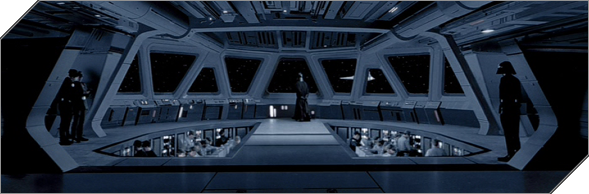



Issued under the authority of His Imperial Majesty, Emperor Draco Tanos
Imperial Protocol establishes the standards of conduct, communication, ceremony, administration, and official representation expected of all members of the Galactic Empire.
Authority and Scope: This manual is issued pursuant to the authority of the Emperor and the administrative powers established by the Imperial Charter. It governs both participation in the Galactic Empire as an out-of-character community and the conduct of Imperial personnel within the in-character setting.
Where any in-character custom conflicts with an out-of-character community rule, staff decision, or requirement of personal safety and respect, the out-of-character rule shall prevail.
Protocol is the visible expression of Imperial order. It ensures that members of every branch, ministry, office, and institution conduct themselves according to a common standard, regardless of rank, assignment, or place of service.
Imperial protocol is not intended to replace judgement. It provides a framework for professional behavior, clear communication, lawful authority, ceremonial dignity, and the protection of Imperial information. When circumstances are not addressed directly by this manual, members are expected to act with discipline, courtesy, restraint, and loyalty to the Empire.
This page serves two related purposes. The first is to establish the real-world standards governing the community, including use of Discord, staff authority, privacy, and respectful participation. The second is to define the customs and procedures observed by characters serving the Galactic Empire in roleplay. These two systems are presented together because members participate in both, but they are deliberately separated so that there can be no confusion about which rules govern real people and which rules govern fictional Imperial service.
All members are expected to treat one another with basic respect. Disagreement is permitted; harassment, personal abuse, intimidation, discrimination, and deliberate humiliation are not. Members should criticize ideas, decisions, or roleplay actions without attacking the person behind them.
Members must distinguish clearly between fictional conflict and real-world interaction. A character may oppose, reprimand, arrest, prosecute, demote, or condemn another character within an agreed roleplay context. None of those actions grants permission to mistreat the player.
In-character rank does not create out-of-character superiority. An Emperor, Grand Moff, Minister, Senator, officer, or enlisted character remains subject to the same community standards as every other member.
Members should participate in a manner that supports the community rather than undermines it. Deliberate disruption, repeated bad-faith arguments, impersonation, ban evasion, fraudulent applications, and attempts to provoke conflict may result in moderation or removal.
Members using an official Imperial account, title, graphic, uniform, or public role should remember that others may reasonably understand them to be representing Galactic-Empire.org. Members shall not claim authority they do not possess or issue public statements on behalf of the Empire without authorization.
Members should respect established continuity, approved character information, and the creative contributions of others. Major changes affecting another member's character, office, unit, property, or storyline should not be imposed without appropriate consent or administrative approval.
Discord serves as the Empire's principal platform for community discussion, administration, coordination, live events, and day-to-day communication. The website remains the primary home for official records, reference material, applications, and long-form content.
Members should use a recognizable display name. An official character may be identified by name, rank, title, or branch where practical. Discord roles indicate access, responsibility, and community function, but they do not replace the personnel database, written appointments, or the established chain of command.
Direct messages may be used for ordinary conversation and administrative coordination. They must not be used to evade moderation, pressure applicants, harass members, or continue a dispute after another person has asked for the conversation to end.
Announcements concerning policy, appointments, disciplinary decisions, elections, events, or site operations should be issued only by authorized staff or officeholders. Members should avoid reposting incomplete or unverified information as though it were official.
Administrators and moderators are responsible for maintaining order, enforcing community rules, protecting members, and preserving the functionality of the website and Discord server. Instructions relating to immediate moderation, channel use, safety, or access must be followed.
Serious misconduct, harassment, threats, abuse of authority, security concerns, and repeated disruption should be reported through the designated administrative channel. Reports should be factual and should include relevant screenshots, links, dates, or other evidence where available.
Members shall not conduct their own disciplinary investigations, interrogate other members, or organize private campaigns against an accused person. Information may be gathered for the purpose of making a report, but decisions belong to the appropriate staff or administrative authority.
A member who believes a moderation or administrative decision was made in error may request review through the established process. Appeals should explain the issue clearly and respectfully. Public arguments, repeated reposting, and pressure campaigns do not substitute for an appeal.
Staff members should not be the sole decision-maker in a matter involving a close personal dispute, direct involvement, or another significant conflict of interest when a reasonable alternative is available.
Personal information obtained through applications, personnel records, moderation, or administrative work must be handled responsibly. It shall not be disclosed, copied, or discussed outside the purpose for which access was granted.
Access to staff channels, application records, moderation logs, databases, or unpublished site material is granted according to responsibility and need. Community access is not determined by in-character rank alone.
Screenshots, private messages, voice recordings, application material, and internal discussions should not be published outside the community without permission, except where disclosure is necessary to report misconduct or protect someone from harm.
All Imperial personnel shall:
An order is lawful when it is issued by a competent authority, concerns a matter within that authority's jurisdiction, and does not violate the Imperial Charter, Imperial law, or a superior lawful directive. Personnel who believe an order is unlawful shall request clarification and, when necessary, refer the matter to the next appropriate authority.
When two orders conflict, the recipient should seek clarification. If clarification cannot be obtained in time, the order issued by the superior competent authority normally takes precedence. Emergency orders concerning immediate threats may temporarily supersede routine instructions.
Imperial personnel shall not conduct investigations, interrogations, surveillance, or disciplinary actions outside their lawful authority. Suspicious conduct, possible corruption, espionage, threats, or unauthorized requests for classified information shall be reported to the appropriate security, intelligence, judicial, or command authority.
Members shall not present rumor, speculation, or incomplete intelligence as established fact. Official announcements should be issued only by authorized personnel. Where accuracy is uncertain, personnel shall state the uncertainty and seek confirmation through proper channels.
Rank, office, and position shall be acknowledged in formal settings. Acceptable forms of address include rank and surname, office title, "Sir," or "Ma'am," as appropriate. Senior civilian officials may be addressed by title.
The Emperor is formally styled His Imperial Majesty. Direct address is Your Majesty. On subsequent reference, Sire may be used where appropriate.
In formal audiences, military personnel render a salute unless ceremony requires otherwise. A bow is customary for civilians. Kneeling may be required during investitures, oaths of fealty, or other solemn ceremonies, but is not expected during ordinary working meetings.
Members of the Imperial Family are addressed by their recognized dynastic or official title. Ceremonial courtesy may consist of a bow or salute according to the member's office and the nature of the occasion.
The Grand Vizier may be addressed as Your Excellency in formal diplomatic or state settings, or as Grand Vizier in ordinary official use. Ministers are addressed as Minister [Surname] or by their full office.
A Grand Moff is addressed as Grand Moff [Surname]; a Moff as Moff [Surname]. Military personnel may render a salute where the official's command authority or the formality of the occasion makes it appropriate.
Officers are addressed by rank and surname. "Sir" or "Ma'am" may be used by subordinates where branch custom permits. Enlisted personnel are addressed by rank and surname in formal settings.
Senators are addressed as Senator [Surname]. Judges and justices are addressed according to the customs of their court. Directors, Commissioners, Procurators, Inspectors, and other officials are addressed by their recognized title.
Members of the Imperial Order are addressed by their recognized rank or title. The use of "Knight [Name]" is acceptable where no higher specific office applies.
Official communications shall be clear, concise, respectful, and directed only to those who require the information. The sender should identify the subject, required action, priority, classification, and response expectation.
To: [Primary recipient]
CC: [Additional recipients, if applicable]
From: [Rank or title, name, and office or branch]
Subject: [Clear description of the matter]
Classification: [Public / Official / Restricted / Classified]
[Appropriate salutation],
[Message body]
Respectfully,
[Rank or title and full name]
[Branch, ministry, office, or assignment]
Deadlines should be expressed using a clear AIA date and time. Vague expressions such as "soon," "later," or "when possible" should be avoided when the timing of action matters.
Reports should distinguish fact, analysis, recommendation, and unresolved uncertainty. Operational reports should identify the situation, action taken, result, losses or damage, and required follow-up.
ScanDocs are standardized in-character transmissions used for command orders, intelligence traffic, personnel notices, diplomatic messages, and secure administrative correspondence.
IMPERIAL SCANDOC
From: [Rank, name, branch, sub-branch, and assignment]
To: [Rank, name, branch, sub-branch, and assignment]
Subject: [Subject of message]
Context: [Action Code]; [Security Item]; [Response Item]
Phasecycle: PSEG[Ten-digit sequence]; [BMUT if applicable]; [RMUT if applicable]
Timestamp: [AIA date and time]
[Transmission body]
The PSEG is the fictional decryption sequence assigned to the transmission. BMUT states the period before message mutation begins. RMUT states the interval between successive mutations. These elements may be used for roleplay flavor in highly sensitive transmissions and may be omitted from ordinary messages.
ScanDoc styling shall not make a transmission difficult to understand. Fictional encryption, technical markings, and formatting should support the roleplay rather than obscure the message.
Every formal meeting shall have a chair or presiding officer. The presiding officer establishes the agenda, recognizes speakers, maintains order, calls for decisions, and determines when discussion has concluded.
In large or formal meetings, participants should request recognition before speaking. The traditional abbreviation RTF may be used to Request the Floor. A participant may conclude with YTF to Yield the Floor. Plain language may be used at the discretion of the chair.
Important meetings should produce a record of decisions, assignments, deadlines, and unresolved issues. Responsibility for each follow-up action shall be assigned to a specific office or individual.
The Imperial Senate and other deliberative bodies may adopt more detailed parliamentary procedures. Where such procedures are silent, the presiding officer shall determine the order of business.
Access to restricted Imperial information is determined by authorization and operational need, not curiosity, rank alone, personal relationship, or political influence.
Restricted and classified material shall be transmitted only through approved channels and shared only with authorized recipients. Personnel shall not copy, summarize, or redistribute such material unless their duties require it.
Personnel receiving an unusual request for intelligence, access codes, personnel data, deployment information, or restricted records shall verify the request through an independent trusted channel. Suspected compromise shall be reported immediately.
Any suspected loss, interception, disclosure, or alteration of protected material shall be reported without delay. Attempts to conceal a compromise may constitute a separate offense.
Formal communication with foreign governments, allied groups, rival organizations, media representatives, or hostile factions may be restricted to authorized diplomatic, command, security, or administrative personnel.
Imperial personnel may interact socially with persons outside the Empire unless a specific security or disciplinary restriction applies. They must not falsely claim to speak on behalf of the Empire or disclose protected information.
Foreign officials, envoys, and representatives shall be treated according to their recognized status. Courtesy does not imply agreement, recognition, alliance, or submission.
Contact with hostile powers shall be governed by operational, diplomatic, and security requirements. Personnel shall not initiate negotiations, make concessions, issue threats, or disclose Imperial intentions without authorization.
Statements made through official channels shall be accurate, disciplined, and consistent with established policy. Unverified claims and personal opinions shall not be presented as Imperial policy.
Promotions may be announced administratively or presented during a formal ceremony. A formal promotion should identify the authority granting the promotion, the member's former and new rank, the effective date, and any new assignment or responsibility.
During a formal ceremony, the recipient is called before the presiding official, the promotion order is read, and the new insignia or rank plaque is presented. The recipient may be asked to reaffirm an oath of service before being dismissed to the congratulations of those assembled.
Award ceremonies should identify the decoration, the authority granting it, and the action or service for which it is presented. The citation should be read in full when practical.
Noble, ceremonial, or honorific titles are conferred by the Emperor or an authority empowered to act in his name. Investiture may include the reading of letters patent, an oath, the presentation of insignia, and formal recognition by the assembled court.
Decorations, titles, and ceremonial honors are worn and announced according to the established order of precedence. Rank and office remain distinct from personal honors unless the granting instrument states otherwise.
Senior officials, officers, judges, senators, and other designated personnel may be required to take an oath before entering office. The oath affirms loyalty to the Empire, obedience to the Charter and law, and faithful performance of the duties entrusted to the officeholder.
Empire Day is observed as the principal civic commemoration of the Imperial state. Ceremonies may include addresses, military reviews, remembrance of service, awards, public celebrations, and reaffirmation of loyalty to the Empire.
Memorial services should honor the deceased with dignity and restraint. A state funeral may include lying in state, military honors, ceremonial guard, official eulogies, and the presentation of a flag, insignia, or decoration to the family or designated successor.
A presiding official may order a moment of silence in memory of the dead, in recognition of a disaster, or at the opening of a solemn proceeding.
Visiting dignitaries should be received according to rank and diplomatic status. The host office shall establish the order of arrival, introductions, seating, honors, security, and public statements.
Each active character shall have an official personnel record containing the information required by the Personnel Administration system. Appointments, promotions, transfers, decorations, titles, service history, and status changes should be recorded promptly.
Personnel may be assigned an Imperial operating number consisting of a branch prefix and a retained numeric identifier. When a member transfers between branches, the prefix may change while the numeric portion remains associated with the character.
A transfer should identify the releasing office, receiving office, effective date, new assignment, and any effect on rank or authority. No member may exercise the powers of a new office before the transfer or appointment takes effect.
Members who expect an extended absence should notify the appropriate authority when practical. Temporary leave does not end service, but command, voting, or administrative duties may be reassigned for the duration of the absence.
A character placed in reserve status remains part of the personnel database and service history but is no longer considered active for ordinary assignments. Reserve characters may be recalled or reactivated through the appropriate process.
A retired or deceased character remains preserved in the historical record. Retirement, death, and other permanent status changes should be clearly distinguished from temporary inactivity or reserve status.
The number and type of active characters permitted to a player are governed by current personnel policy. Inactive characters remain searchable in the database and may retain historical rank, awards, and service records.
Promotions and appointments must be issued by a competent authority and recorded in the personnel system. Acting appointments should be identified as temporary and should not be represented as permanent rank or office.
Emperor: His Imperial Majesty / Your Majesty / Sire
Grand Vizier: Grand Vizier [Surname] / Your Excellency
Grand Moff: Grand Moff [Surname]
Moff: Moff [Surname]
Minister: Minister [Surname]
Senator: Senator [Surname]
Military Officer: Rank and surname / Sir / Ma'am
Director or Commissioner: Title and surname
Imperial Knight: Knight [Name] or recognized rank
Subject: After-Action Report
Operation: [Name]
Reporting Officer: [Rank and name]
Date: [AIA date]
Classification: [Level]
Situation: [Initial circumstances]
Mission: [Assigned objective]
Action: [What occurred]
Result: [Outcome]
Losses: [Personnel and materiel]
Recommendations: [Required follow-up]
By authority of [granting authority], [name] is promoted from [former rank] to [new rank], effective [AIA date], and is assigned to [office, command, or unit].
I solemnly swear that I shall bear true faith and loyalty to the Galactic Empire; uphold the Imperial Charter and laws; obey the lawful authority of the Emperor; and faithfully discharge the duties of the office entrusted to me.
Order, clarity, discipline, and respect are the foundation of Imperial service.