










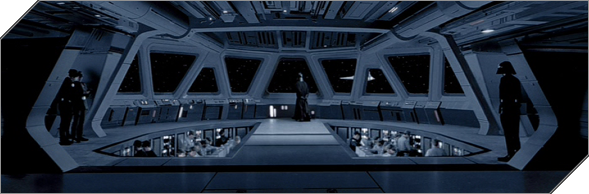




The Grand Officers are the highest-ranking officers of the Imperial Army, Imperial Navy, and Imperial Starfighter Corps. They comprise the Grand Generals of the Army, Grand Admirals of the Navy, and Grand Marshals of the Starfighter Corps. Each holds the coequal command grade of C7 and stands at the summit of the rank structure of that officer’s service.
Grand Officer rank is conferred personally by the Emperor upon officers of exceptional ability, judgment, loyalty, and achievement. It is neither an ordinary promotion nor the automatic consequence of holding a particular command. Appointment recognizes an officer as fit to undertake military responsibilities of the greatest strategic importance anywhere in the Empire.
The Grand Admiralty, Grand Generalcy, and Grand Marshalcy preserve the professional identity and traditions of their respective services. Together, their members are known as the Grand Officers of the Imperial Armed Forces. None of the three ranks possesses precedence over another by reason of service alone.
The Imperial Stormtrooper Corps and Battlestation Command, commonly known as Imperial Operations, possess no corresponding Grand Officer rank. Their command structures remain those established for their respective services.
A Grand Officer is appointed solely by the Emperor. Recommendation may come from the Supreme Commander, a service chief, Imperial High Command, or another officer entrusted with knowledge of the candidate’s service, but no recommendation binds the Throne.
Appointment is based upon demonstrated mastery of strategy, command under extreme conditions, service-wide professional achievement, fidelity to lawful authority, and the capacity to exercise independent judgment without losing sight of the wider interests of the Empire. Seniority alone creates no entitlement to Grand Officer rank.
There is no fixed establishment or required complement of Grand Officers. Appointments are made as the needs of the Empire require. The absence of a numerical ceiling does not make the rank routine; its rarity is preserved by the personal judgment of the Emperor and the exceptional standard demanded of every appointee.
Grand Admiral, Grand General, and Grand Marshal are coequal ranks within command grade C7. None outranks another merely because one service is senior, larger, or assigned the leading part in an operation.
Among Grand Officers, ceremonial precedence is determined by the date of Imperial appointment unless the Emperor establishes another order for a particular occasion. Operational precedence is determined by lawful command assignment, not by title or date of rank.
The Supreme Commander remains the senior professional commander of the Imperial Armed Forces by virtue of office. The authority of the Supreme Commander does not depend upon holding one of the three Grand Officer ranks.
Grand Officer rank signifies the highest degree of confidence and military standing, but rank alone does not grant unrestricted command over every formation of a service. A Grand Officer exercises operational authority through an appointment, command, theater assignment, or directive issued by the Emperor, Supreme Commander, Imperial High Command, or competent service authority.
Grand Officers may be entrusted with Imperial Armadas, Grand Armies, Grand Wings, major theaters, expeditionary forces, strategic reserves, or special commands assembled for a defined purpose. Their orders bind all forces placed under their lawful operational command, including supporting elements drawn from another service.
An officer’s Grand rank does not authorize interference with formations outside an assigned command, displacement of another commander without authority, or alteration of service policy solely by personal direction.
The Army Chief of Staff, Chief of Naval Operations, and Chief of Starfighter Operations retain institutional command of their respective services. They direct service administration, readiness, doctrine, assignments, personnel policy, and the execution of orders transmitted through Imperial High Command.
A Grand Officer who does not simultaneously hold the relevant service-chief office remains subject to that lawful institutional chain of command. The Grand Officer may nevertheless possess superior authority within an assigned theater, formation, or mission where the terms of appointment expressly provide it.
The distinction is between rank and office. Grand Officer rank establishes status, precedence, and eligibility for the greatest commands. A service-chief appointment establishes responsibility for governing the service as a whole. One individual may hold both, but neither position automatically carries the other.
Grand Officers are frequently assigned to operations involving more than one branch. A Grand Admiral may command a theater centered upon naval warfare, a Grand General may direct a planetary campaign supported by fleets and aerospace forces, and a Grand Marshal may lead a strategic aerospace operation requiring naval basing and ground support.
Cross-service authority arises from the officer’s written command assignment. It does not arise merely from holding C7 rank. Forces not assigned to the operation remain within their established chains of command.
Where multiple Grand Officers serve in the same theater, the Emperor, Supreme Commander, or Imperial High Command shall designate the senior operational commander and define the responsibilities of each subordinate command. Coequal rank does not permit competing command authorities.
The public roll records every serving Grand Officer of the Imperial Armed Forces together with the command or principal assignment presently entrusted to that officer. Appointment to one rank does not reduce the number of appointments available in another, and no office is displayed merely to preserve an artificial complement.
No current appointments are recorded upon the public roll.
No current appointments are recorded upon the public roll.
No current appointments are recorded upon the public roll.
Appointment as a Grand Officer does not by itself grant membership in the Imperial Ruling Council, Imperial High Command, or the command of an entire military service. Such membership or authority must arise from a separate office or express Imperial appointment.
Grand Officer rank does not confer civil authority, territorial governorship, immunity from military law, or power over the Imperial Stormtrooper Corps, Battlestation Command, Imperial Guard, Imperial Order, COMPNOR, Imperial Intelligence, or any civil institution except where forces or responsibilities have been lawfully assigned.
Every Grand Officer remains subject to the Emperor as Commander-in-Chief, the Supreme Commander, the Imperial Charter, military law, and the lawful orders governing the officer’s command. The distinction of Grand rank enlarges responsibility; it does not diminish accountability.